
Introduction
Silver jewellery has remained one of the most loved jewellery choices for centuries because of its elegance, affordability, and timeless appeal. From minimal everyday accessories to luxury designer pieces, silver continues to dominate both traditional and modern fashion trends.
While shopping for silver jewellery, you’ve probably noticed markings such as:
- 925
- Sterling Silver
- Silver Hallmark
But many buyers still wonder:
- What is 925 silver?
- What does sterling silver mean?
- Is 925 silver real?
- Why does silver tarnish?
- How can you identify genuine silver jewellery?
Understanding these details is extremely important before buying silver jewellery, especially with the growing number of imitation products in the market.
In this guide, we’ll explain everything you need to know about 925 silver, hallmarking, tarnishing, and proper silver jewellery care.
What is 925 Silver?
Understanding 925 Silver Meaning
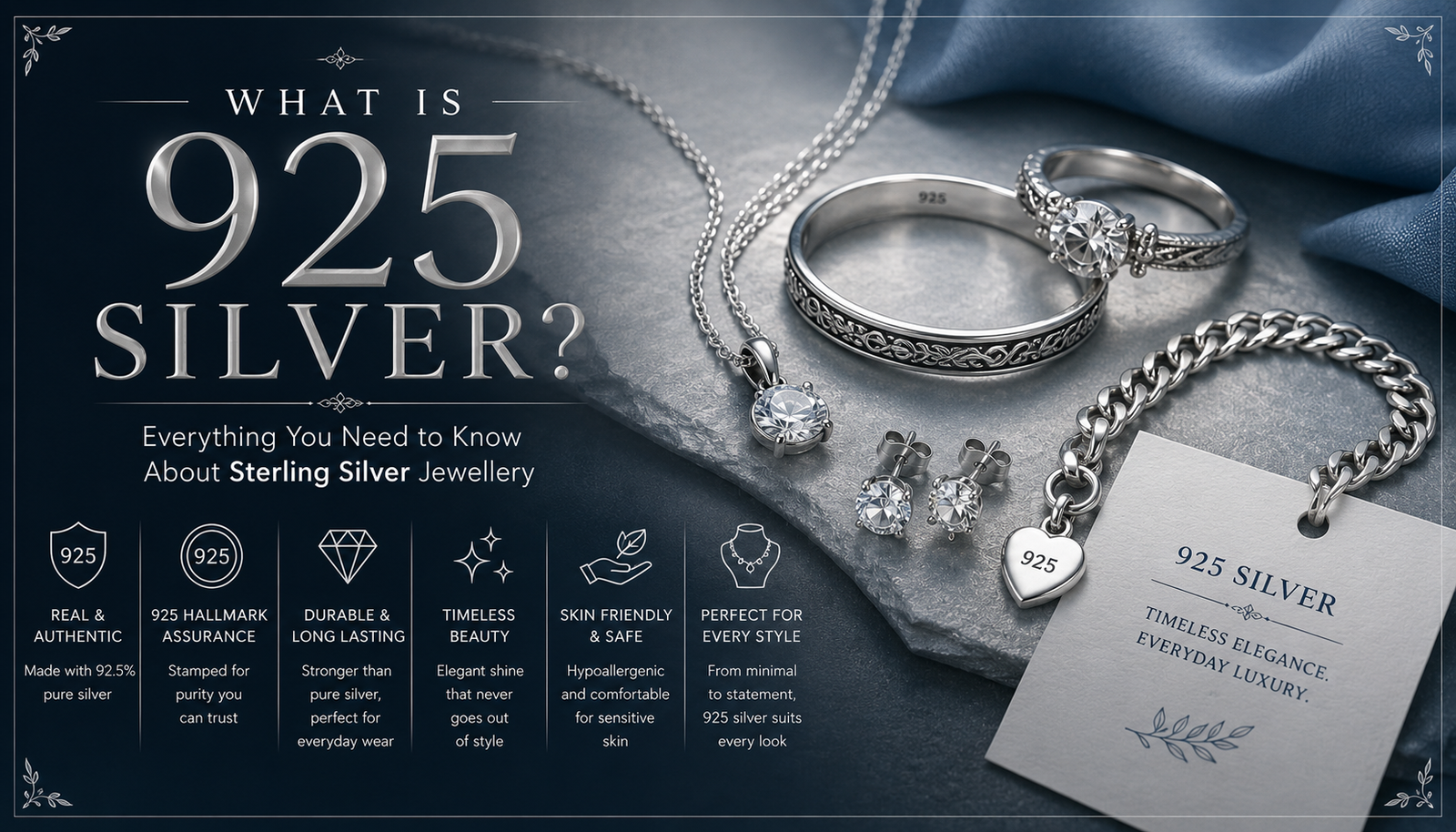
925 silver, also known as Sterling Silver, is a high-quality silver alloy made using:
- 92.5% pure silver
- 7.5% other metals (usually copper)
Pure silver by itself is very soft and not durable enough for regular jewellery use. To make it stronger and more suitable for crafting jewellery, small amounts of other metals are added.
This combination creates:
- Better durability
- Improved strength
- Long-lasting jewellery
- Enhanced wearability
Sterling Silver Meaning
Why is it Called Sterling Silver?
The term Sterling Silver refers to silver that meets the international standard of 92.5% pure silver composition.
This is why genuine sterling silver jewellery is usually stamped with:
- 925
- Sterling
- Sterling Silver
- S925
These markings indicate authenticity and quality.
Is 925 Silver Real Silver?
Yes — 925 Silver is Genuine Silver
Many people mistakenly believe that 925 silver is fake because it contains other metals.
In reality:
- 925 silver is authentic silver
- It is the global standard for silver jewellery
- Most premium silver jewellery uses sterling silver
The added alloy simply improves durability and jewellery strength.
Why Not Use 100% Pure Silver?
Pure Silver is Too Soft
Pure silver (99.9% silver) bends and scratches very easily.
If jewellery were made using only pure silver:
- Rings could deform
- Chains could break
- Stone settings could loosen
Adding small amounts of copper or other metals helps maintain:
- Shape
- Structure
- Durability
- Daily wear performance
Understanding Silver Hallmarking
What is a Silver Hallmark?
A hallmark is an official purity mark stamped on silver jewellery to indicate authenticity and metal composition.
Hallmarking helps buyers confirm:
- Silver purity
- Manufacturer identity
- Authenticity standards
Common Silver Hallmarks
| Hallmark | Meaning |
|---|---|
| 925 | 92.5% pure silver |
| Sterling | Sterling silver standard |
| S925 | Sterling silver |
| 999 | Pure silver |
Why Hallmarking is Important
Hallmarking Protects Buyers
Silver hallmarking helps prevent fraud and low-quality imitation jewellery.
Certified sterling silver provides:
- Better trust
- Quality assurance
- Higher resale confidence
- Authenticity verification
Before purchasing silver jewellery, always check for proper hallmark stamps.
Why Silver Tarnishes
Understanding Silver Tarnishing
One of the most common questions buyers ask is:
Why does silver turn black or dark over time?
This process is called tarnishing.
Silver reacts naturally with:
- Air
- Moisture
- Sulfur compounds
- Chemicals
- Pollution
This reaction creates a dark layer on the jewellery surface.
Does Tarnishing Mean Silver is Fake?
No — Tarnishing is Normal
Authentic sterling silver can tarnish over time.
In fact, slight tarnishing often indicates the jewellery contains real silver.
Fake silver-plated jewellery may:
- Peel
- Lose coating
- Change color unevenly
while genuine sterling silver usually restores beautifully after cleaning.
How to Prevent Silver Tarnishing
Silver Jewellery Care Guide
Proper care can significantly reduce tarnishing and maintain jewellery shine for years.
Tips to Care for 925 Silver Jewellery
1. Store Jewellery Properly
Keep silver jewellery in:
- Airtight boxes
- Anti-tarnish pouches
- Dry storage areas
Avoid humidity exposure.
2. Avoid Chemicals
Remove silver jewellery before using:
- Perfumes
- Hair sprays
- Cleaning products
- Chlorine water
- Lotions
Chemicals accelerate tarnishing.
3. Clean Silver Regularly
Use:
- Soft microfiber cloth
- Silver polishing cloth
- Mild soap solution
Avoid harsh abrasives.
4. Avoid Water Exposure
Frequent exposure to:
- Sweat
- Salt water
- Humidity
can increase oxidation.
5. Wear It Frequently
Interestingly, regular wear can sometimes help reduce tarnishing because natural skin oils help maintain shine.
How to Identify Genuine 925 Silver Jewellery
Signs of Real Sterling Silver
Genuine 925 Silver Usually Has:
- 925 hallmark stamp
- Smooth finishing
- Slight natural weight
- Non-magnetic properties
- Professional craftsmanship
Signs of Fake Silver Jewellery
Fake Silver Often:
- Feels extremely lightweight
- Peels or flakes
- Turns green quickly
- Lacks hallmarking
- Has uneven plating
Sterling Silver vs Silver-Plated Jewellery
Understanding the Difference
| Feature | Sterling Silver | Silver-Plated Jewellery |
|---|---|---|
| Silver Content | 92.5% real silver | Thin silver coating |
| Durability | Long-lasting | Coating wears off |
| Value | Higher | Lower |
| Tarnishing | Natural oxidation | Peeling possible |
| Repairability | Can be polished | Difficult to restore |
Why Sterling Silver Jewellery is Popular
Affordable Luxury with Timeless Appeal
925 silver jewellery offers an excellent balance between:
- Beauty
- Durability
- Affordability
- Luxury appearance
It is widely used for:
- Rings
- Necklaces
- Bracelets
- Earrings
- Minimal jewellery
- Designer collections
Sterling silver also complements both:
- Traditional fashion
- Modern styling
making it extremely versatile.
Is 925 Silver Good for Daily Wear?
Yes — Sterling Silver is Ideal for Everyday Use
Because of its durability and affordability, sterling silver is commonly used for daily jewellery.
With proper care, 925 silver jewellery can last for many years while maintaining its elegance and shine.
Conclusion
925 silver, also known as sterling silver, is one of the most trusted and widely used silver standards in the jewellery industry.
Its combination of:
- 92.5% pure silver
- Durability
- Timeless beauty
- Affordable luxury
makes it a perfect choice for both everyday wear and premium jewellery collections.
Understanding silver hallmarking, tarnishing, and jewellery care helps buyers make informed decisions and properly maintain their jewellery for long-lasting shine and value.
Whether you’re purchasing your first sterling silver piece or expanding your jewellery collection, knowing how to identify genuine 925 silver ensures smarter and more confident buying decisions.


But I must explain to you how all this mistaken ideashwad of denoucing pleasure and praising pain was born and I will give.
But I must explain to you how all this mistaken ideashwad of denoucing pleasure and praising pain was born and I will give.